What You Need To Know About Your Rights Against Robocalls And Telemarketers
Ever been interrupted during dinner by a prerecorded message about your car’s extended warranty or woken up to a sales pitch you never asked for? You aren’t alone.
Dec 26, 20251.2K Shares54.8K Views
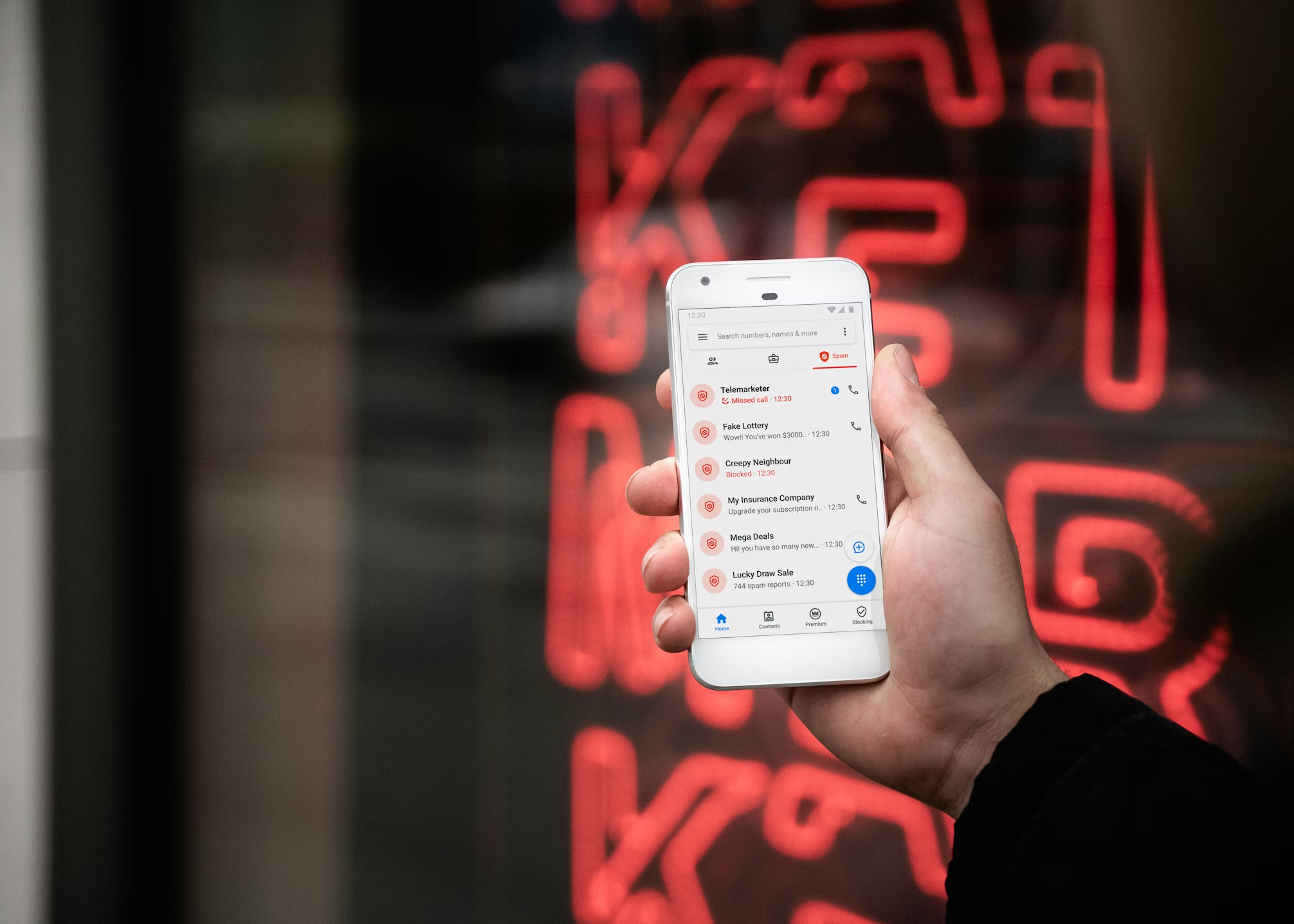
Ever been interrupted during dinner by a prerecorded message about your car’s extended warranty or woken up to a sales pitch you never asked for? You aren’t alone.
Robocalls and telemarketing calls have become a common annoyance for millions of people, turning a personal device into a constant source of disruption.
What many people don’t realize is that there are clear laws in place designed to protect your privacy and your time. You don’t have to tolerate repeated unwanted calls, and you’re not expected to navigate this problem without help.
Understanding your rights is the first step toward regaining control of your phone and pushing back against unwanted calls. Let’s break it all down, so you know exactly where you stand.
What Counts As A Robocall Or Telemarketing Call?
People often use the term robocall for everything. However, the law sees things a bit differently. Any call that involves an autodialer or contains prerecorded voices is a robocall. Advances in technology allow these calls to be made cheaply from anywhere worldwide.
The Federal Communications Commission (FCC) has expanded to include modern AI-generated voices. In February 2024, it issued a declaratory ruling confirming that AI-generated voices, including sophisticated voice cloning technologies, fall under the definition of artificial or prerecorded voice messages.
On the other hand, telemarketing refers to a plan or campaign to induce purchases via telephone. It covers the sale of goods, services, or charitable contributions.
Note that not all automated calls are classified as telemarketing. Informational calls are generally permitted under broader terms than sales calls. These include appointment reminders, delivery updates, and emergency notifications.
Debt collection calls also fall under a separate regulatory category. While informational robocalls are allowed, they cannot include any sales pitch. If a message combines informational data with a coupon, it becomes a marketing call. Such dual-purpose messages require a higher standard of consumer consent.
Your Rights As A Consumer
Consumer protection in the telecom industry starts with a simple idea: you decide who can call you. Federal law sets strict rules on how companies must ask for your permission. Below, we’ll explain your right to cancel that permission:
The Do Not Call Registry
The National Do Not Call Registry is a central pillar of consumer protection. It was established in 2003 to mitigate the volume of unwanted sales calls. It is managed by the Federal Trade Commission.
The registry is a list provided to telemarketers to identify restricted numbers. You can put your home or cell phone number on it at donotcall.gov. Once you are on it, legitimate telemarketers have 31 days to stop calling you. They are required to download the list every month and scrub your number from their files.
Registration never expires unless the number is disconnected or reassigned.
The Telephone Consumer Protection Act (TCPA)
The TCPA of 1991 is the primary federal statute governing automated calls. Under this act, consumers maintain the right to exclude themselves from automated marketing. Conn Law, PC explains that the law imposes strict liability and statutory damages for violations of consent, providing a legal remedy when callers fail to honor opt-out requests or National Do Not Call Registry protections.
The TCPA provides a unique private right of action for individual consumers. This allows citizens to sue companies directly for violations. This mechanism fuels thousands of class-action lawsuits annually. The statutory damages for violations are significant:
- The base penalty is $500 per illegal call or text.
- Willful or knowing violations can result in triple damages ($1,500).
- Fines for DNC (Do Not Call) violations can reach up to $50,120 per call under FTC rules.
You may want to know how to report TCPA violations. It’s a straightforward process. The FCC provides an online Consumer Complaint Center for reporting unsolicited automated communications. Make sure to document the call details like date, time, number, and content, so the agency can track patterns and take action.
State Laws
Many states have enacted "mini-TCPA" laws that are stricter than federal guidelines. These laws often close loopholes created by federal court decisions.
Florida is a leader in aggressive consumer protection legislation. The Florida Telephone Solicitation Act (FTSA) requires express written consent for all marketing texts. It offers no exemptions for existing business relationships unless documented. Florida maintains a "one-to-one" consent standard for each marketer. This means a consumer must agree to calls from a specific, named company.
The Oklahoma Telephone Solicitation Act (OTSA) largely mirrors Florida's law. It prohibits more than three solicitation calls in a 24-hour period.
Washington law requires callers to identify themselves within the first 30 seconds. If a consumer indicates they want to hang up, the caller must end the call within 10 seconds. Washington also imposes a penalty of $1,000 per violation for repeated incidents.
Several states, such as Maryland, have shortened the window for legal telemarketing calls. While the federal rule allows calls until 9:00 p.m., these states cut off earlier.
Take Back Control Of Your Phone
Robocalls and telemarketers may feel unavoidable, but they don’t get to run the show. You have rights, protections, and tools on your side, and using them can cut down on unwanted interruptions.
Just as important, don’t hesitate to take action when those rights are ignored. Keeping records, reporting violations, and exploring your legal options all help discourage abusive calling practices.
While no solution is perfect, informed consumers are far less likely to be targeted repeatedly. Every step you take sends a clear message that your time and privacy matter.
Latest Articles
Popular Articles